What happened, in brief
On August 1, 1944, the Polish Home Army rose up against the Nazi occupation of Warsaw. For 63 days, the people of Warsaw, soldiers and civilians together, teenagers and grandmothers, nurses and priests, postal workers and students, held parts of their city against one of the most brutal armies in history. Poorly armed and vastly outnumbered they valiantly fought street by street, building by building, for a free Poland. They saw liberation only days away. The Soviet army rested across the river. Help never came.
The fighters carried a motto older than the uprising itself: "For our freedom and yours." It was the creed of generations of Poles who fought not only for Poland but for the idea that no nation should live under tyranny. In the streets of Warsaw in 1944, ordinary people lived it.
The uprising ended on October 2, 1944. The Nazis systematically destroyed the city in retaliation, block by block, and some 200,000 Poles were dead. Warsaw, a city of over a million, left in ruins.
The PW you'll see everywhere
Walk anywhere in Warsaw and you'll notice it: the letters P and W fused into an anchor, painted on walls, etched into monuments, worn on t-shirts. It is the Kotwica, the symbol of the Polish resistance, standing for Polska Walcząca, Fighting Poland. It was scrawled across the city in 1944 as a promise that Poland would not surrender, and Varsovians never stopped painting it. When your clients spot it, they are looking at a symbol that has meant defiance for eighty years.
Why the Soviets let it burn
This part stops Americans cold. The Red Army sat on the east bank of the Vistula and watched. Not indifferent, but with malicious calculation. The Home Army answered to Poland's government-in-exile in London, not to Moscow. Stalin wanted a communist Poland after the war, and a victorious, independent Home Army presented the one obstacle he could not control. So he let the Nazis destroy it for him, then walked into the rubble and called it liberation.
Why it resonates so deeply with Americans
Americans understand fighting for freedom against overwhelming odds. It is the founding story of the United States, ordinary people picking up arms against an empire. When American travelers learn what happened in Warsaw, they recognize something of themselves in it. The courage, the refusal to surrender, they believe their freedom merits any price. It feels familiar, and that familiarity makes the scale of the sacrifice hit even harder.
Americans poignantly discover this chapter. Poland's fight gets barely a footnote in American schools, crowded out by the Western Front and the Pacific of World War II. Travelers arrive knowing almost nothing, and then they stand in the streets where teenagers held barricades, where nurses ran field hospitals under bombardment, where an entire city chose to fight rather than submit. The discovery feels personal, like uncovering a family story nobody told them. Clients consistently tell us this is the part of the Poland journey they talk about for years afterward.
There is something else, too. Poles eagerly share this story with Americans in a way that feels personal and direct. For four decades under communism, they could not tell it freely, Soviet officials censored the Home Army's sacrifice from the history books. This is the first generation with the liberty to speak openly to Western visitors about what really happened, and the pride and emotion come through in every guide, every museum, every conversation. Americans sense that they hear something real, something that a heroic story suppressed for decades, and it creates a connection between traveler and place that few destinations can match.
How we recommend experiencing it
We design this into our Warsaw itineraries as a half day that clients consistently call the highlight of their trip:
Hire a guide with deep historical knowledge for an afternoon tour. The history lives everywhere in Warsaw, in the buildings, the street corners, the plaques set into the sidewalks. But it stays invisible without a guide to unlock it. The right guide makes it come to life, pointing to an ordinary apartment block and telling your clients what happened on that spot in August 1944, tracing the uprising's front lines through streets they just walked. The story lands ten times harder than reading a plaque, and it turns an afternoon walk into something your clients will never forget.
Visit the Warsaw Rising Museum. It does not lecture, it immerses. Sound, film, reconstructed streets, and artifacts that put visitors inside those 63 days. Plan two to three hours.
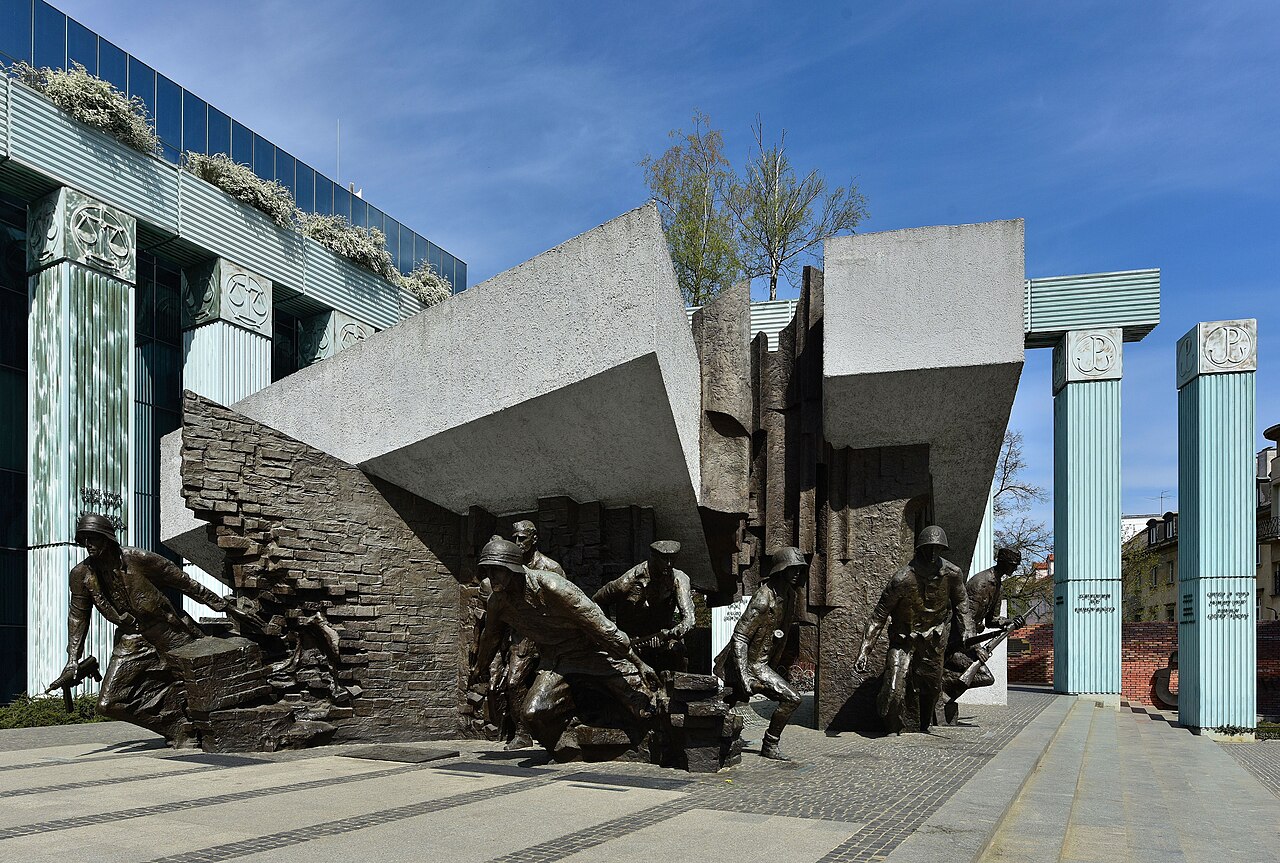
Visit the Warsaw Uprising Memorial. The monument itself is stark and powerful, and standing before it after the museum brings the scale of the loss into focus.
The Takeaway for Travel Advisors
The Warsaw Uprising is not a niche interest for history buffs. It is one of the most emotionally powerful stories in twentieth century Europe, and most of your clients have never heard it. That is exactly why it works. Poland rewards the traveler who arrives curious, and this is the chapter they will carry home.
We design individualized Poland journeys around each traveler's interests, together with you.