November 1: All Saints' Day, when the cemeteries glow
All Saints' Day (Dzień Wszystkich Świętych, jen fshist-KEEKH shvyen-TIHKH) is one of Poland's most important days of the year, and it looks nothing like Halloween. Families travel from across the country to their hometown cemeteries, clean the family graves, lay chrysanthemums, and light candles called znicze (ZNEE-cheh), glass lanterns that burn for hours. As night falls, the cemeteries glow with thousands of flames, a sight that stops first-time visitors in their tracks.
The observance continues into November 2, All Souls' Day (Zaduszki, zah-DOOSH-kee), though only the first is a public holiday. Visitors are welcome in the cemeteries, and an evening walk through one of the great historic cemeteries, such as Powązki in Warsaw, is one of the most moving experiences Poland offers. Go quietly, and go after dark.
What advisors should know: November 1 is a national public holiday. Shops and malls are closed, public transport runs on holiday schedules, and traffic around cemeteries is heavy all day. Plan a slower, contemplative day rather than a shopping or museum day.
November 11: Independence Day, and a date Americans already know
November 11 is Poland's Independence Day (Narodowe Święto Niepodległości), marking the day in 1918 when Poland regained its independence after 123 years of partition between Russia, Prussia, and Austria. On that day, Józef Piłsudski (piw-SOOT-skee) took authority in Warsaw, and the Polish state reappeared on the map of Europe.
American travelers will recognize the date. November 11, 1918 was also the day the Armistice ended the First World War, the same Armistice that America's Veterans Day commemorates. Poland's independence and America's Veterans Day spring from the same morning. When we tell clients that Poland regained its freedom on the very day their grandfathers' war ended, the history stops being abstract and becomes personal.
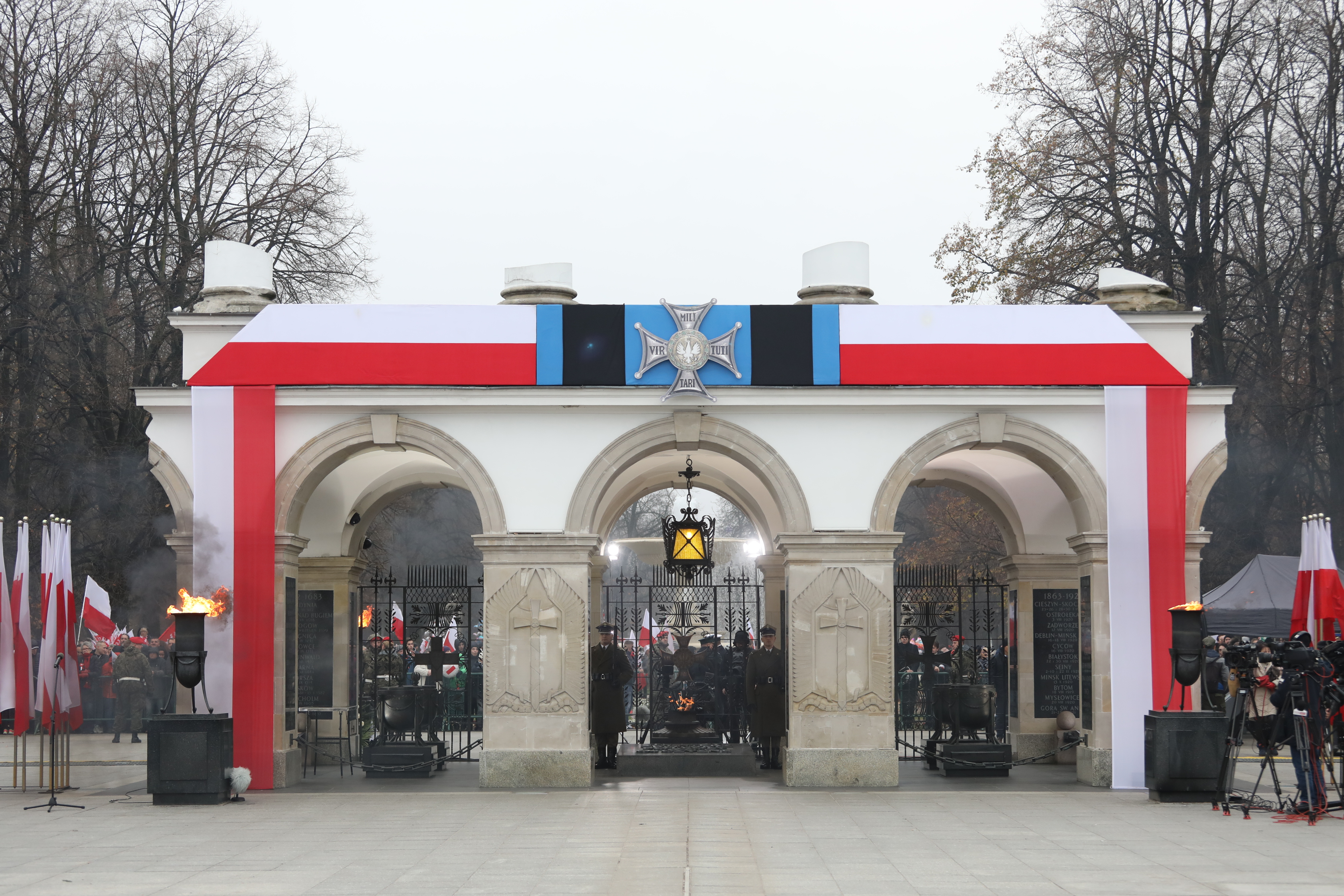
Today the day is marked with official ceremonies, including the changing of the guard at the Tomb of the Unknown Soldier in Warsaw, flags on every street, and large public marches in the capital. It is a proud, emotional day, and an excellent day for a guided walk through Warsaw's independence story.
What advisors should know: November 11 is also a public holiday, with closures and altered transport schedules. In Warsaw, the large Independence March fills central streets in the afternoon, so route clients around it or, for the right traveler, toward a vantage point with a guide who can explain what they are seeing.
The Takeaway for Travel Advisors
Late autumn is not the season most Americans picture for Poland, but these two holidays give November travelers something summer cannot: a direct line into the Polish heart. The tenderness of November 1 and the pride of November 11 are the same qualities your clients will feel in their guides, their hosts, and their hosts' kitchens all year long.
We design individualized Poland journeys around each traveler's interests, together with you.